How to Use Undress AI: Steps, Accuracy and Privacy Risks
What is Undress AI and What Does It Claim to Do?
Undress AI is an online tool that claims to use artificial intelligence to digitally remove clothing from photos of people. It’s essentially a type of deepfake generator focused on producing synthetic nude images based on uploaded portraits. The developers promote it as entertainment or “photo enhancement,” but the implications are far more serious.
How It Works Technically (Basic Overview)
Undress AI likely uses diffusion-based models or GANs (Generative Adversarial Networks) trained on datasets of human bodies and clothing. The AI attempts to simulate what might be under the visible clothing by estimating body shapes and textures. In reality, the outputs are fictional, not based on real data—but they are often presented as realistic.
Step-by-Step Guide: How to Use Undress AI
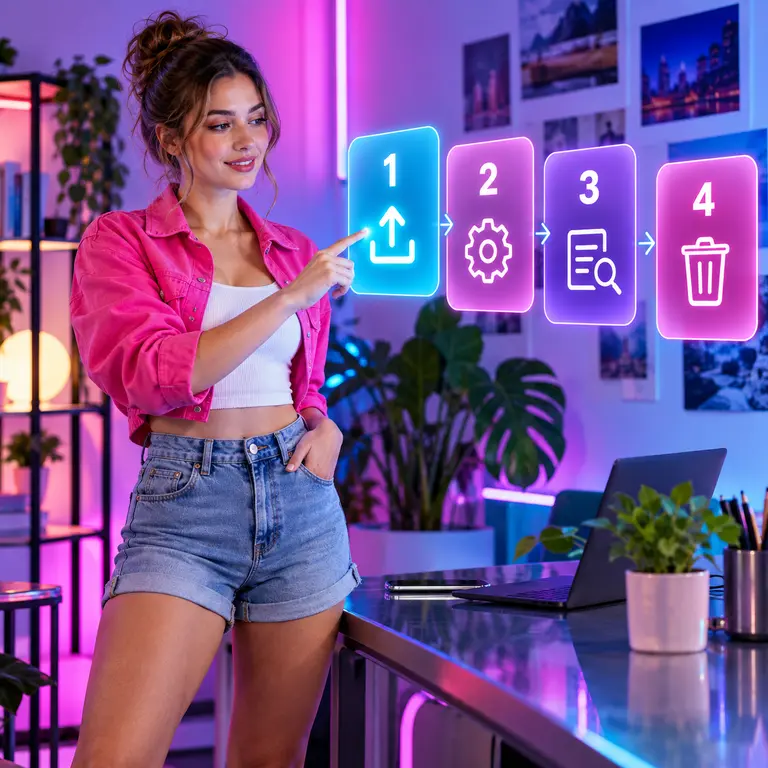
1. Accessing the Website or App
Most users find Undress AI through a web-based interface or via unofficial Telegram bots. Be extremely cautious—many clones or scam versions exist. Always verify the source before interacting.
2. Uploading a Photo
After accessing the tool, users are prompted to upload an image—typically a frontal portrait. Some versions accept full-body shots. Most services require that the photo is clear, well-lit, and features a single person.
3. Image Generation and Output
Once the photo is uploaded, the system “processes” the image, applying its AI model. This may take from a few seconds to several minutes. Some platforms claim to use cloud GPU services to speed this up. Users are then shown a final image—which is entirely AI-generated and may include watermarks, blurs, or forced payment walls.
4. Optional Features and Paid Versions
Most Undress AI tools lock full-resolution images or remove watermarks only after payment. Common tactics include offering free previews and requiring “credits” to download. Be cautious with payment forms—many users report scams and hidden charges.
Is Undress AI Free to Use?
While some versions promote themselves as “free,” most implement a freemium model. That means:
- Free Tier: You can upload a photo and get a low-res or blurred preview.
- Paid Tier: To get the “full result,” you’re asked to pay or purchase credits.
There are also offers for free coins or promotions, but these often lead to spam or security risks.
How Accurate is Undress AI?
Claimed Accuracy vs Real User Experience
Some websites claim over 90% accuracy in predicting anatomy and body shape. In reality, user reports show:
- Blurry or generic outputs
- Body shapes that don’t match the real person
- Faces detached from body alignment
- Overused “template” bodies across different images
Why visual examples cannot establish accuracy
Few legitimate examples exist online due to obvious privacy violations. Most “results” shown are AI mockups or pre-made images.
Risks and Warnings
Privacy Risks When Uploading Photos
Your uploaded images may be stored or reused without your knowledge. Some platforms may sell or leak your content.
Potential for Scams and Malware
Many Undress AI apps are disguised phishing tools. Fake versions can install spyware, ransomware, or crypto miners.
Ethical and Legal Considerations
Creating nude images of someone without consent may violate laws in many countries. Even if you use your own photo, the ethical line is blurry. Some jurisdictions have outlawed sexual deepfakes entirely.
Final Thoughts
Should You Use Undress AI?
Undress AI may look like a fascinating application of AI—but the risks far outweigh the curiosity.
In summary, it’s a tool that walks the line between digital experimentation and digital violation. Proceed with extreme caution—or better, don’t proceed at all.
What this guide can and cannot verify
The term “Undress AI” describes several unrelated services, rather than a single verified product. Their interfaces, billing systems, retention policies and availability can differ. A step shown in one product should not be treated as a confirmed feature of another. This article explains how to evaluate a provider's claims and risks; it is not evidence that an image-generation service can reconstruct a person's real appearance beneath clothing.
Before trusting a tool's result
AI-generated edits are predictions assembled from training patterns, not a view of concealed reality. Even a visually plausible output may invent anatomy, clothing boundaries, lighting or background details. Do not use synthetic images as evidence about an identifiable person.
A safer evaluation checklist
- Identify the operator: look for a legal business name, contact method and current terms before creating an account.
- Review data handling: check whether uploads are retained, reviewed, used for model training or shared with processors. If those answers are missing, avoid uploading sensitive material.
- Verify billing: distinguish one-time credits from recurring subscriptions and locate cancellation instructions before paying.
- Respect consent: use only fictional or clearly authorized adult imagery. Never create or distribute intimate depictions of real people without consent.
For a deeper look at the underlying issues, read what happens to uploaded photos, subscription costs before paying, and generated images versus edited photos.
How to interpret accuracy claims
Marketing percentages rarely tell you which test images were used, whether unsuccessful attempts were excluded or how reviewers defined a successful result. Compare claims only when a provider publishes a reproducible evaluation method. For independent editorial assessment, image consistency, disclosure and privacy are more useful than an unsupported accuracy percentage.